
Tradition and Innovation
The design of the villa begins with the distinctive characteristics of its site and the desire to establish an intimate relationship between architecture and landscape.
My intention was not to design a house in the image of the past, but rather to embrace the spirit of traditional architecture through a contemporary interpretation.

Building Form and Site
The villa extends longitudinally along the elongated plot, with its principal entrances positioned on the north-eastern side, facing the access road.

The distance between the house and the swimming pool has been carefully considered to minimise overshadowing throughout the year, allowing the outdoor areas to be enjoyed across the seasons.
The underlying idea was to create a house in constant dialogue with its surroundings, framing views of the landscape and the distant sea.
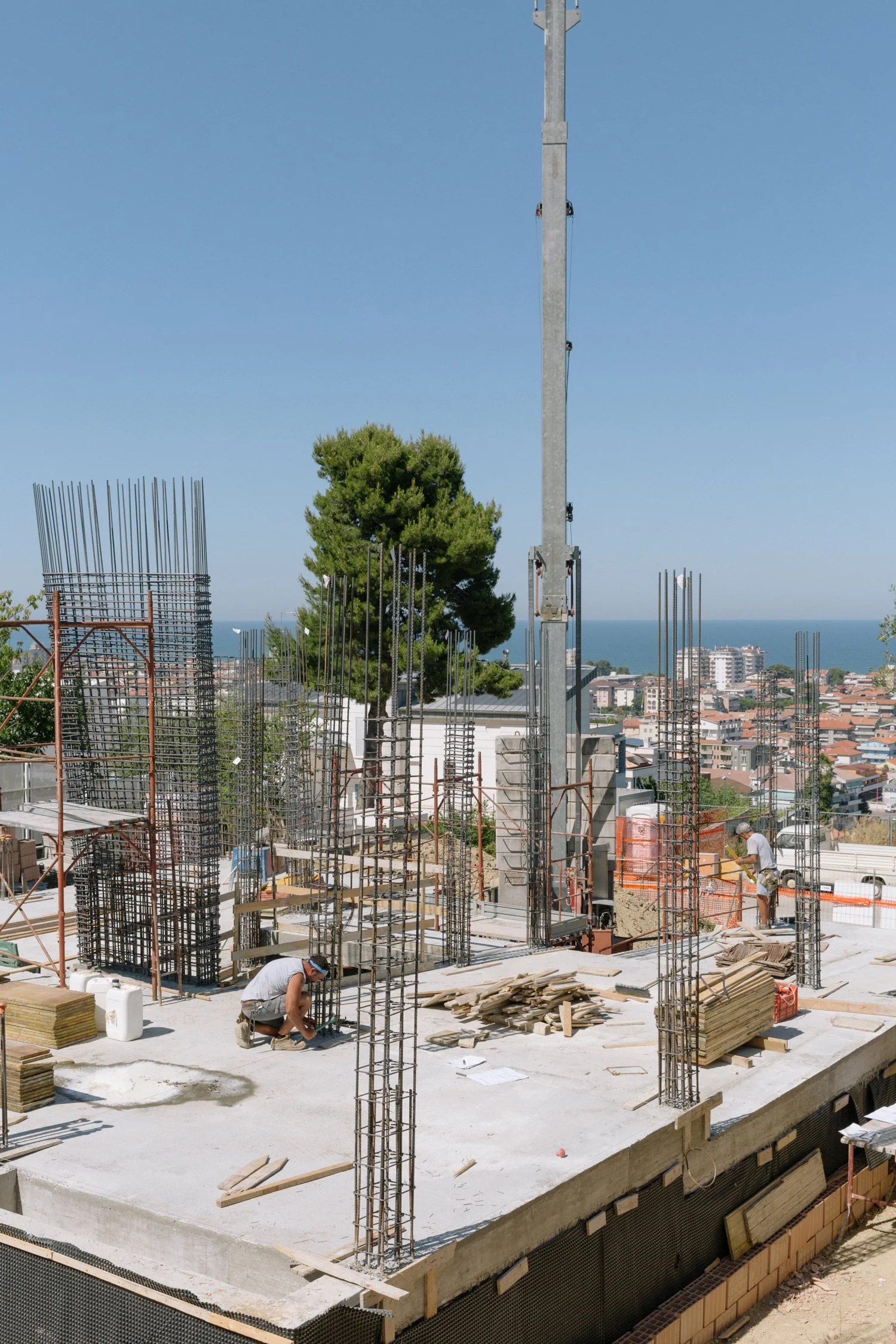
The project draws on modern construction technologies while respecting the proportions, colours and material qualities that have historically shaped the local built environment, seeking a lasting and meaningful connection with the surrounding landscape.

Geometries and Perspectives
The form of the house emerges from this continuous dialogue with the site.
The centrally positioned staircase becomes the architectural fulcrum of the composition, where perspective lines towards the landscape converge, while simultaneously defining the internal spatial organisation.


On the north-eastern façade, the volume is carved away to form the main entrance. A smaller recess on the north-western side defines a secondary access.
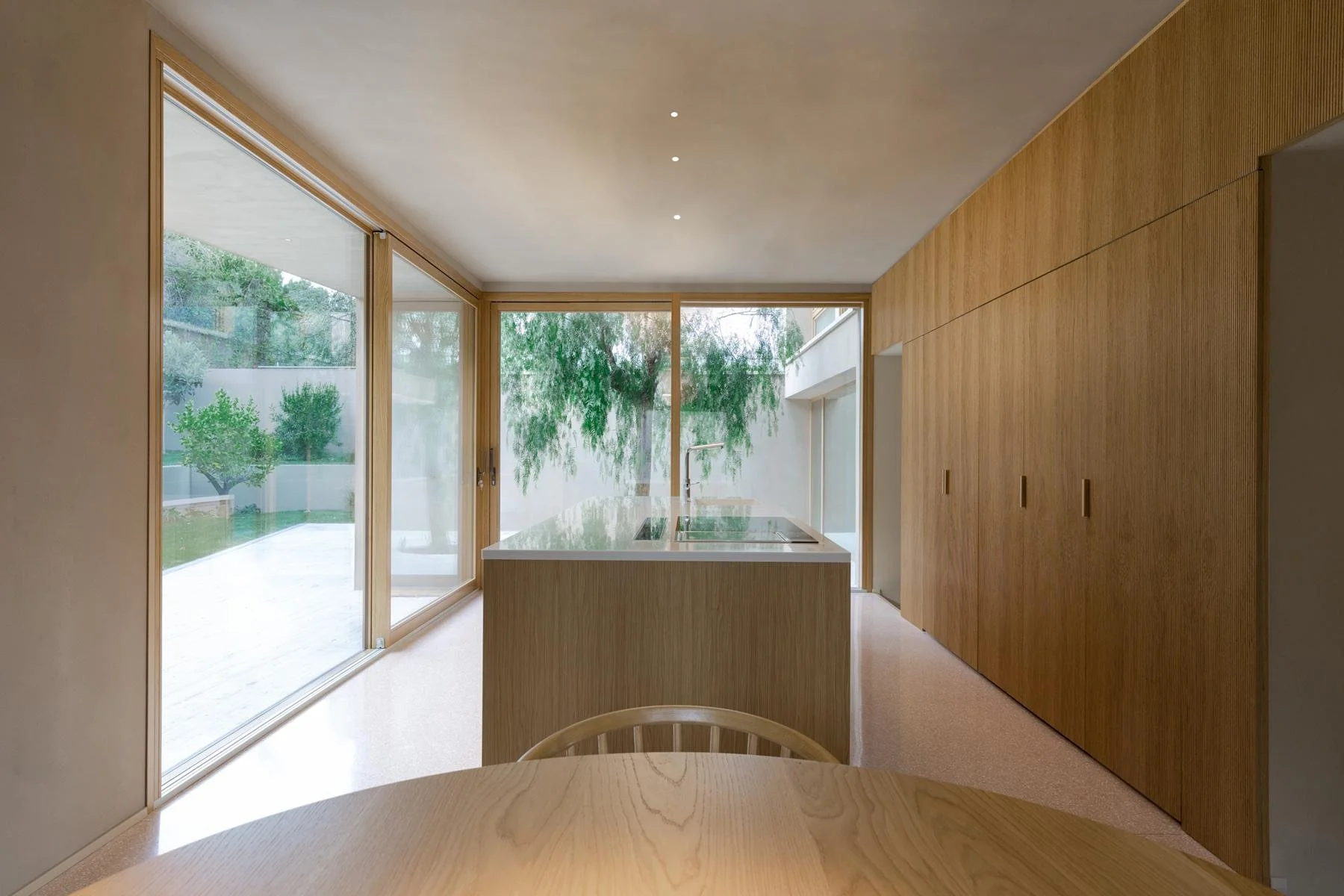
On the south-western side, a courtyard establishes a transition between the domestic interior and the garden. To the south, the building extends beyond the kitchen, creating a sheltered outdoor space.

Internal Layout
The house is arranged over three levels, including the basement. The internal organisation responds to solar orientation, environmental performance and the changing patterns of occupation throughout the year.Each space has been considered in relation to daylight, seasonal use and its connection with the surrounding outdoor areas.

Raumplan
I wanted to make the most of the site's natural characteristics, particularly the gentle slope of the hillside, transforming the topography into an integral part of the experience of inhabiting the house.
This led to the adoption of the Raumplan principle, with internal spaces arranged at different levels following the natural gradient of the terrain. Rather than imposing a uniform floor level, the architecture responds to the landscape, establishing a continuous relationship between interior spaces and the surrounding ground.

Courtyards
The north-eastern courtyard, positioned along the principal downhill façade, becomes a shared outdoor space connecting the living room, study and central staircase. An ornamental tree, planted within a permeable surface, forms its focal point.

The south-western courtyard, adjoining the living room and kitchen, is conceived as a more intimate and sheltered space. Its planting and shaded areas create a protected setting for outdoor living, extending the domestic atmosphere into the garden.